Best Pasta Dishes for Outdoor Events in South Florida
Discover light and refreshing pasta dishes that are perfect for outdoor events in South Florida. Explore our curated options to please every palate.
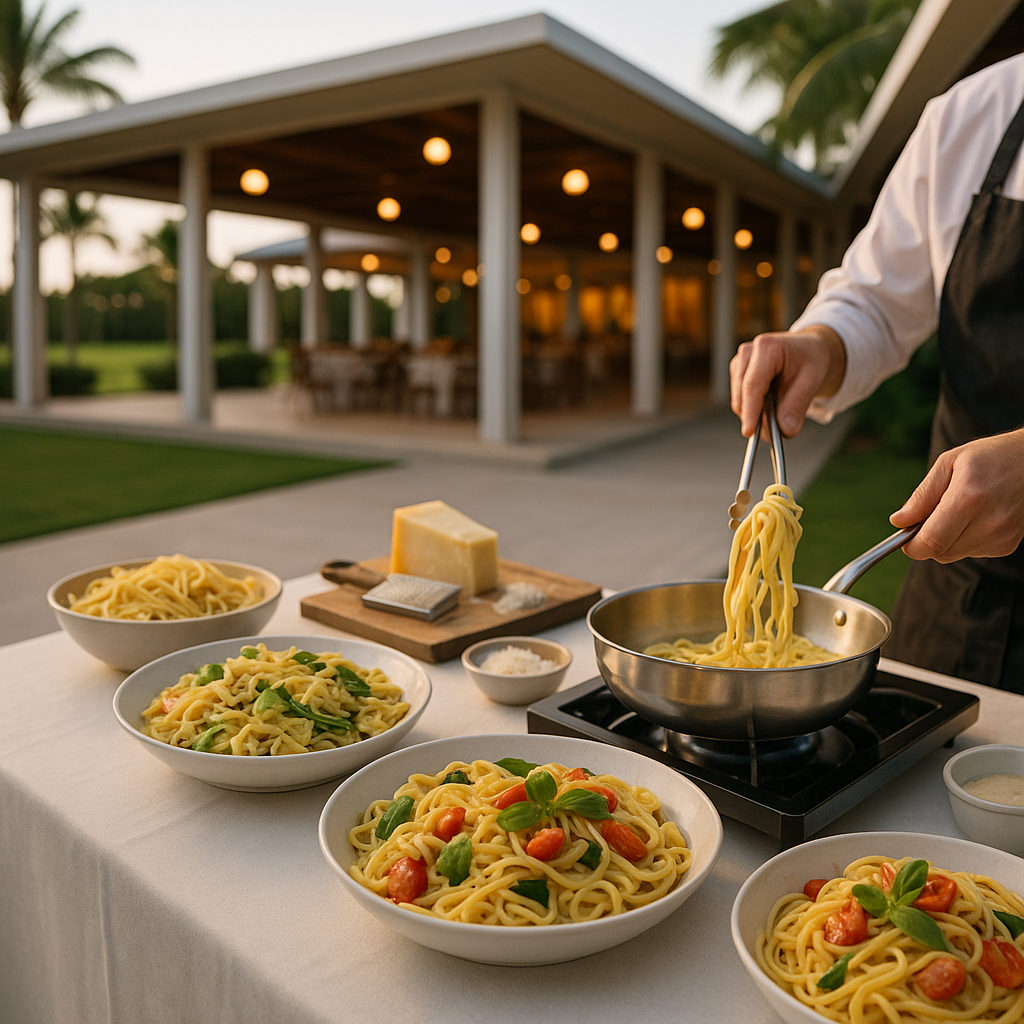
Outdoor events here come with a specific set of problems: heat, humidity, wind, afternoon rain, and a guest list that almost always includes someone avoiding gluten, meat, or dairy. Pasta handles most of that well, but only if you choose the right dishes and plan the service around the weather instead of ignoring it. Here's what actually holds up on a South Florida patio, lawn, or rooftop, and how to serve it.
Why pasta works outdoors
Pasta scales cleanly. A dish that feeds eight feeds eighty using the same method, which is not true of individually plated proteins or anything that has to come off a grill à la minute. It also holds its texture better than most starches when it sits, as long as it's cooked slightly firm and dressed correctly.
Just as important, pasta doesn't have to be hot. Room-temperature and chilled pasta dishes are a real category, not a compromise, and they solve the problem of guests who don't want a steaming bowl of anything when it's 88 degrees at 4 p.m. A menu that mixes one warm dish with one or two cold dishes gives people a choice without doubling your logistics.
Pasta shapes that survive the heat
Shape matters more outdoors than indoors. A few guidelines worth following:
- Short, ridged, or twisted shapes are the safest bet. Fusilli, penne rigate, cavatappi, farfalle, and orecchiette hold dressing in their grooves and cavities, and they stay separate as they cool.
- Long strands are best kept warm. Linguine and spaghetti clump as they cool and are awkward to eat standing up with a plate in one hand. If you want a long noodle on a warm-weather menu, serve it hot off a station rather than from a chafing dish that's been sitting.
- Filled pasta needs attention. Ravioli and tortellini dry at the edges on an open buffet. They're better suited to a station where they're finished to order or held in sauce.
- Cook alternative pastas a touch firmer. Whole wheat, chickpea, lentil, and gluten-free shapes tend to soften and sometimes break down as they sit, so pulling them a minute early gives you room.
Dishes worth putting on a warm-weather menu
Caprese-style pasta salad
Fresh mozzarella, halved cherry tomatoes, basil, good olive oil, and a light balsamic or red wine vinaigrette over a short shape. It reads as summer, it's naturally vegetarian, and it's forgiving. Two notes that make a real difference: dress the pasta while it's still warm so it absorbs the vinaigrette, then hold back a portion of dressing to refresh it right before service. Add the basil and any delicate garnish at the last moment, because herbs bruise and darken quickly in the heat.
Lemon garlic shrimp with linguine
Bright, light, and a reliable draw for seafood-leaning crowds. This one belongs in the hot column and works best cooked or finished in front of guests rather than held. Shrimp is unforgiving in a chafing dish; it goes rubbery fast. If you're serving it, plan for it to move quickly and keep the sauce a little looser than you would indoors, since pasta keeps absorbing liquid while it sits.
Pesto pasta with grilled vegetables
Zucchini, squash, bell peppers, and red onion, grilled and tossed with basil pesto. This is one of the few dishes that's genuinely good hot, warm, or cold, which makes it a smart anchor when you don't know how long the buffet will be open. Toss the vegetables separately and combine close to service so they don't weep into the pasta. Basil-based sauces dull in color as they sit, so a squeeze of lemon and a fresh drizzle of oil before service helps.
Chilled sesame-ginger noodle salad
Soba or another chilled noodle with julienned vegetables and a soy-ginger dressing. It's a useful contrast on a menu that's otherwise Italian-leaning, and it holds up well on ice. Two things to flag with your planner: soba is typically buckwheat but often contains wheat, so it isn't automatically gluten-free, and soy and sesame are common allergens that should be labeled clearly.
Baked pasta, with a caveat
A baked ziti or similar is comfort food and holds heat better than almost anything else, which makes it the right call for an evening event or a cooler month. It's usually the wrong call for a midday outdoor event in August. Read the forecast before committing to it.
Seasoning for food that isn't hot
Cold and room-temperature food tastes flatter than hot food. Dishes that seemed correctly seasoned in the kitchen often land bland on the table. Acid and salt are the fix: a little more vinegar or citrus than feels right while tasting warm, and a final seasoning check right before service rather than only at the end of cooking. Fat helps too, since a dressed pasta salad absorbs oil as it chills and can end up looking and tasting dry.
Food safety when you're serving outside
This is the part that's easy to underestimate at an outdoor event, and it's worth being conservative about. General guidance widely used in the U.S. is to keep cold foods at or below 40°F (4°C) and hot foods at or above 140°F (60°C), and to limit the time food spends between those temperatures. That window is commonly cited as two hours, dropping to one hour when the ambient temperature is above about 90°F (32°C) — a threshold South Florida clears regularly.
Practical steps that follow from that:
- Hold cold pasta salads on ice or in an ice bath rather than simply chilling them beforehand and setting them out.
- Put out smaller batches and replenish from a cooler instead of setting out the full quantity at once.
- Get the station under shade or a tent. Direct sun defeats insulated equipment quickly.
- Track when food goes out. A timer or a written time on the pan is more reliable than memory during a busy service.
- Don't return food that's been sitting to a cooler for later service.
These are general principles, not a substitute for the rules that apply to your specific event. Requirements for temperature logs, handwashing setups, on-site cooking, open flame, and permits vary by county, venue, and event type, and they change. Confirm current requirements with your venue and your local health authority, and work with a caterer who handles that as part of the job. If you'd like to talk through what your site allows, start with a booking inquiry and bring the venue details.
Setting up a live pasta station outdoors
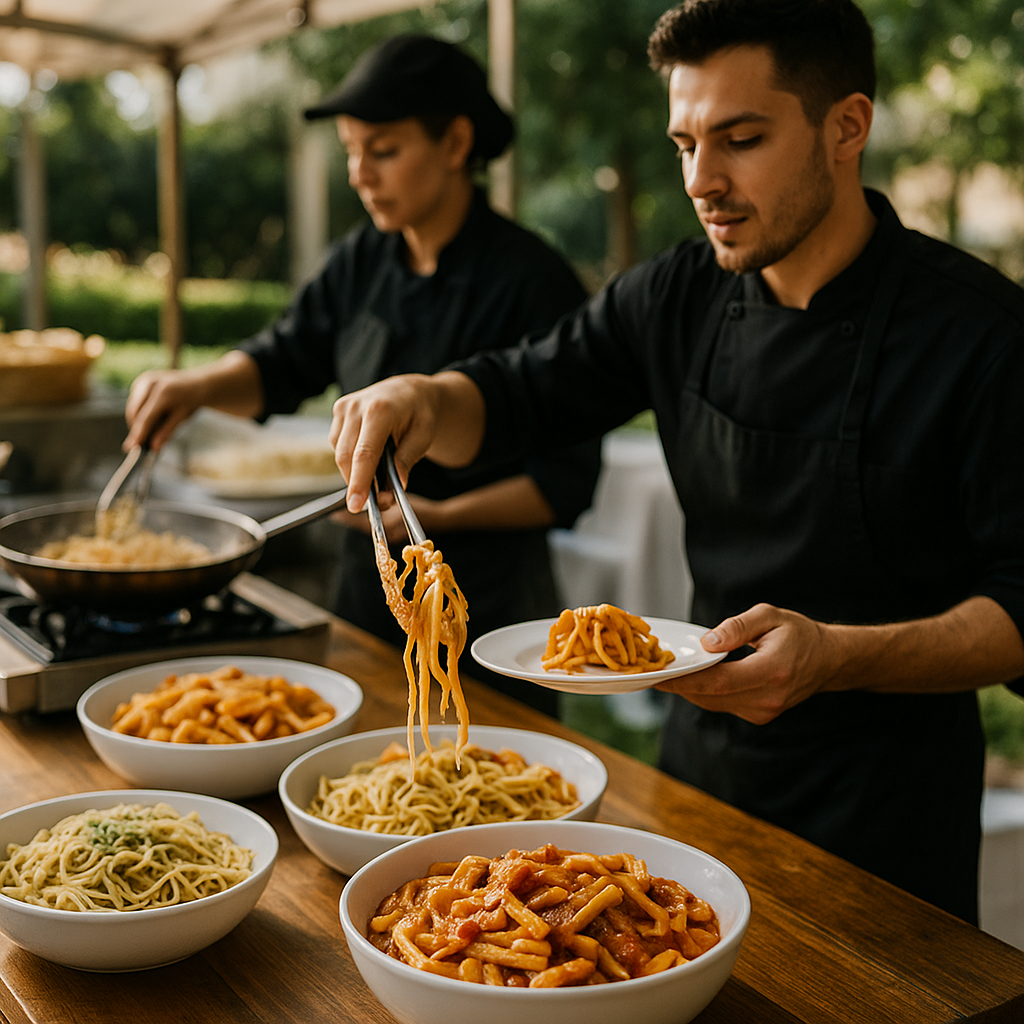
An interactive station where guests choose their pasta, sauce, and add-ins solves several problems at once. Food is finished to order rather than held, which is better for both quality and safety. Guests with restrictions can see what's going into their plate. And the station gives people somewhere to gather, which matters at events where the room hasn't warmed up yet.
Outdoors, the setup deserves a walkthrough well before the event date. Things worth checking:
- Shade and cover. Both for the food and for whoever is working the station for two hours.
- Level, stable ground. Grass and sand are harder than they look for rolling equipment and hot pans.
- Power and water access. Induction and warming equipment draw real amperage; know whether you're on house power or a generator, and where the nearest water source is.
- Wind. It affects open flame, tent stability, and anything light on the table. Some venues restrict open flame entirely.
- Flow. Place the station where a line can form without cutting through the bar, the dance floor, or the main walkway.
- A rain plan. Not a hypothetical here. Decide in advance where the station moves if weather turns.
Dietary needs, handled honestly
Gluten-free pasta has improved considerably, and corn, rice, chickpea, and lentil shapes hold up well enough for event service when cooked carefully. What's harder is avoiding cross-contact, which requires separate water, separate utensils, and separate serving vessels — not just a different box of pasta. If you have guests with celiac disease or serious allergies, say so early in the planning conversation so it's built into the setup rather than improvised on site.
The same applies to dairy, nuts (pesto is usually made with pine nuts), shellfish, soy, and sesame. Clear labeling at the station is the simplest thing you can do, and it saves your guests from having to interrogate a server mid-line.
How much to plan for
A common planning range for pasta as a main course is roughly 3 to 4 ounces of dry pasta per guest, and about half that when pasta is one of several dishes. Adjust up for a long evening event, a younger crowd, or a menu where pasta is the only substantial item, and talk through actual counts with your caterer rather than relying on a rule of thumb alone.
Common questions
What pasta shapes work best outdoors?
Short shapes with texture — fusilli, penne rigate, farfalle, cavatappi, orecchiette. They hold dressing, stay separate as they cool, and are easy to eat standing up.
How far ahead can pasta salads be made?
Components can generally be prepped ahead and kept refrigerated, but final assembly is better close to service. Fresh herbs, cheese, greens, and anything crisp should go in last. Follow the cold-holding guidance above and your local requirements for how long prepared food may be held.
Hot dishes or cold dishes for a daytime event?
Both, if the budget allows. A cold or room-temperature dish gives guests a lighter option in the heat, and one hot dish from a station keeps the menu from feeling like a picnic. If you can only do one for a midday summer event, lean cold.
Can pasta work for a plated dinner outdoors?
Yes, though timing gets tighter. Plated service outdoors means pasta travels farther between the kitchen and the table, so shapes and sauces that tolerate a few minutes of holding are the safer choice.
Planning your menu
The short version: pick shapes that tolerate sitting, build at least one dish that's good at room temperature, season for the temperature you're actually serving at, get the station under shade, and treat holding times seriously. Everything else is preference.
If you're working on a menu, browse the weekly pasta lineup for ideas, check where we operate to confirm we cover your event area, and tell us about your event when you're ready to talk specifics. You can also see what's available through the store.