Creating the Perfect Mediterranean Grazing Table with Pasta
Explore how to create a stunning Mediterranean grazing table featuring delicious pasta dishes. Perfect for any event!
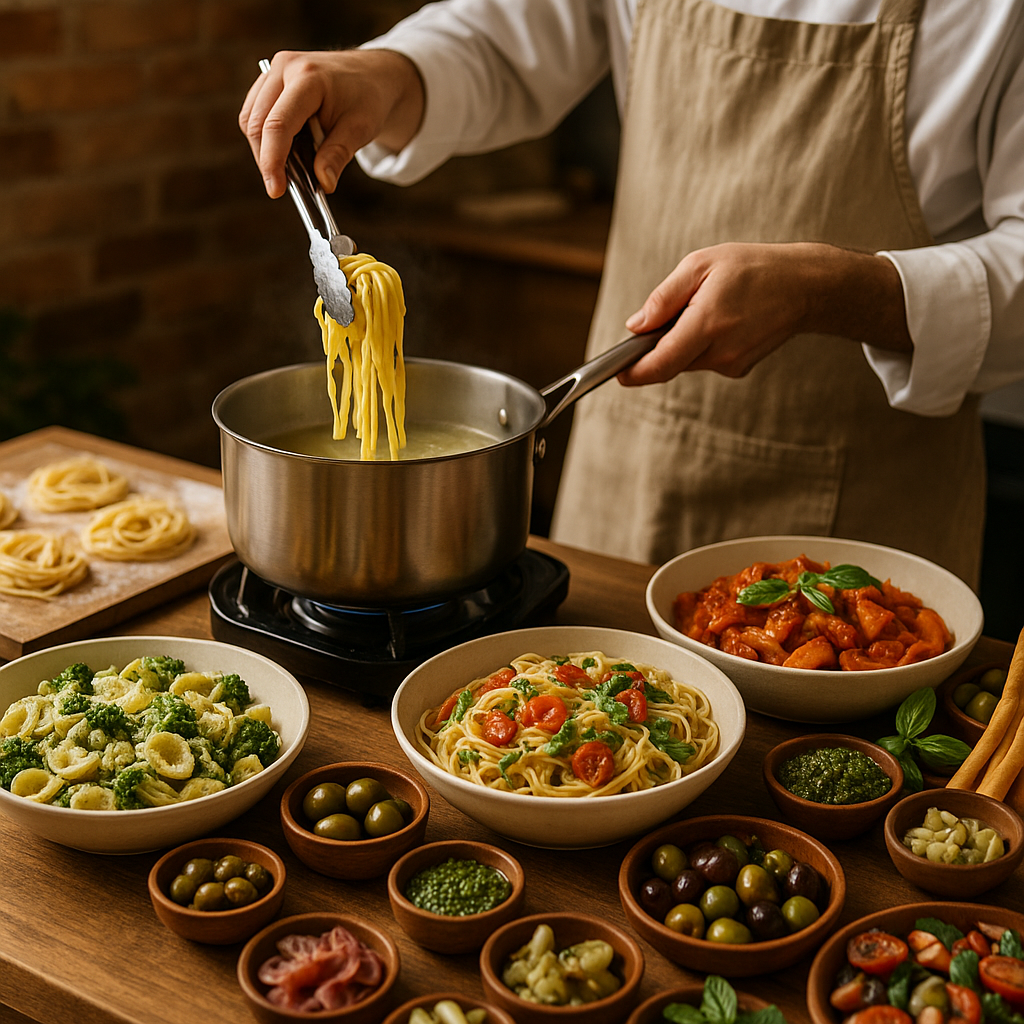
A grazing table is built to be picked at for an hour or two, which is exactly the problem with most pasta. Hot noodles that were perfect at 6:00 turn into a heavy, congealed block by 6:40. The fix is not to skip pasta. It is to choose shapes, sauces and service temperatures that were designed to sit.
What a Mediterranean Grazing Table Is
A grazing table is a buffet-style spread arranged as one continuous landscape rather than a line of chafing dishes. The Mediterranean version leans on the ingredients common across Southern Europe, North Africa and the Levant: olive oil, lemon, fresh and dried herbs, tomatoes, cucumbers, olives, briny cheeses, legumes, grilled vegetables and flatbread. Most of it is served at room temperature, which is part of why the format works for events. Guests serve themselves, they eat standing, and the table stays visually full for the length of the reception.
Pasta fits that logic well, as long as you treat it as a room-temperature dish. The pasta salads of the Mediterranean coast are not an American invention layered onto the theme. Sicilian pasta dressed with tomato, basil and almonds, or short shapes tossed with olive oil, capers and lemon, belong on this table without any stretching.
Choosing Pasta Shapes That Hold Up
Shape matters more than sauce for a table that sits out. Long strands are the wrong tool here. Spaghetti and fettuccine tangle as they cool, they are difficult to serve with tongs from a shallow bowl, and guests end up with an unmanageable portion on a small plate.
Short, sturdy, textured shapes are the ones to build around:
- Fusilli and casarecce. The twists and folds trap dressing and small ingredients like capers, chopped olives or diced feta.
- Orecchiette. The cup shape holds chickpeas, roasted vegetable pieces and herb sauces, and it stays distinctly separate rather than clumping.
- Rigatoni and paccheri. Large enough to look substantial on a platter, ridged enough to hold a tomato-based dressing.
- Farfalle. Visually distinct on a spread, though the pinched center stays firmer than the wings, so check your timing.
- Orzo or fregola. Closer to a grain salad in behavior. Both work well spooned into small vessels rather than served from one large bowl.
One practical note on cooking: starch firms up as it cools, so pasta that is perfectly al dente in the pot will read as hard once it is chilled and dressed. For a cold or room-temperature dish, cook about a minute past where you would stop for a hot plate, then drain and cool it quickly under cold water. Rinsing is usually discouraged for hot pasta because it strips the surface starch that helps sauce cling, but for a cold salad that same starch is what glues the noodles together, so rinsing is the right call.
Sauces That Survive an Hour on the Table
This is where most grazing-table pasta goes wrong. Cream and butter emulsions are built for immediate service. As they cool they separate, the fat sets, and the dish looks tired long before the event ends. Cheese-heavy sauces behave the same way.
Olive oil and acid are the reliable base. A dressing of good olive oil, lemon juice or red wine vinegar, salt and garlic stays glossy at room temperature and actually improves as it sits, because the pasta keeps absorbing it. Build from there:
- Tomato-forward, no cream. Halved cherry tomatoes tossed with olive oil, garlic and torn basil, ideally salted and left to sit so they release their juice into the dressing.
- Herb sauces. Basil pesto, salsa verde or a parsley-and-caper sauce. Blanching the herbs briefly before blending helps them hold their color if the dish is made in advance.
- Roasted vegetable and legume. Roasted eggplant, zucchini or red pepper with chickpeas, lemon and oregano. Sturdy, filling and naturally vegan before you add cheese.
- Briny and sharp. Olives, capers, preserved lemon, sun-dried tomato. These carry flavor at room temperature, where softer seasoning tends to flatten out.
Season more aggressively than you would for a hot dish, and taste after the pasta has cooled. Cold food reads as blander, and pasta absorbs salt and acid as it rests, so a salad that tastes balanced while warm will often need another squeeze of lemon before it goes out.
If you want a genuinely hot pasta dish at the event, serve it as a station rather than a platter, with a cook plating to order. That keeps the hot component hot and the grazing table focused on what it does best. Our pasta station service is built around exactly that split.
Cheese, Herbs and Vegetables
Firm and briny cheeses hold their shape and flavor on a table that sits: feta, ricotta salata, aged pecorino, halloumi that has been grilled and cooled. Fresh mozzarella works but weeps liquid as it sits, so drain it well and consider adding it to the platter shortly before guests arrive rather than mixing it in hours ahead. Soft, bloomy-rind cheeses are better placed on the cheese portion of the spread than mixed into pasta.
Hardy herbs like oregano, thyme and rosemary can go in early. Delicate ones like basil, mint and dill bruise and darken, so tear them in at the last moment or scatter them over the top as a finishing layer. That final scattering also does a lot of visual work.
For vegetables, roast rather than boil. Roasted vegetables hold their texture over a long service window, while steamed or boiled ones release water into the dressing and go limp. Raw elements with structure, such as cucumber, radish, shaved fennel or celery, add crunch that survives alongside the softer components.
Layout and Presentation
A grazing table reads as abundant because of variation in height, not because of volume. Use raised stands, wooden boards, shallow bowls and small individual vessels at different levels so the eye travels across the spread rather than scanning a flat line.
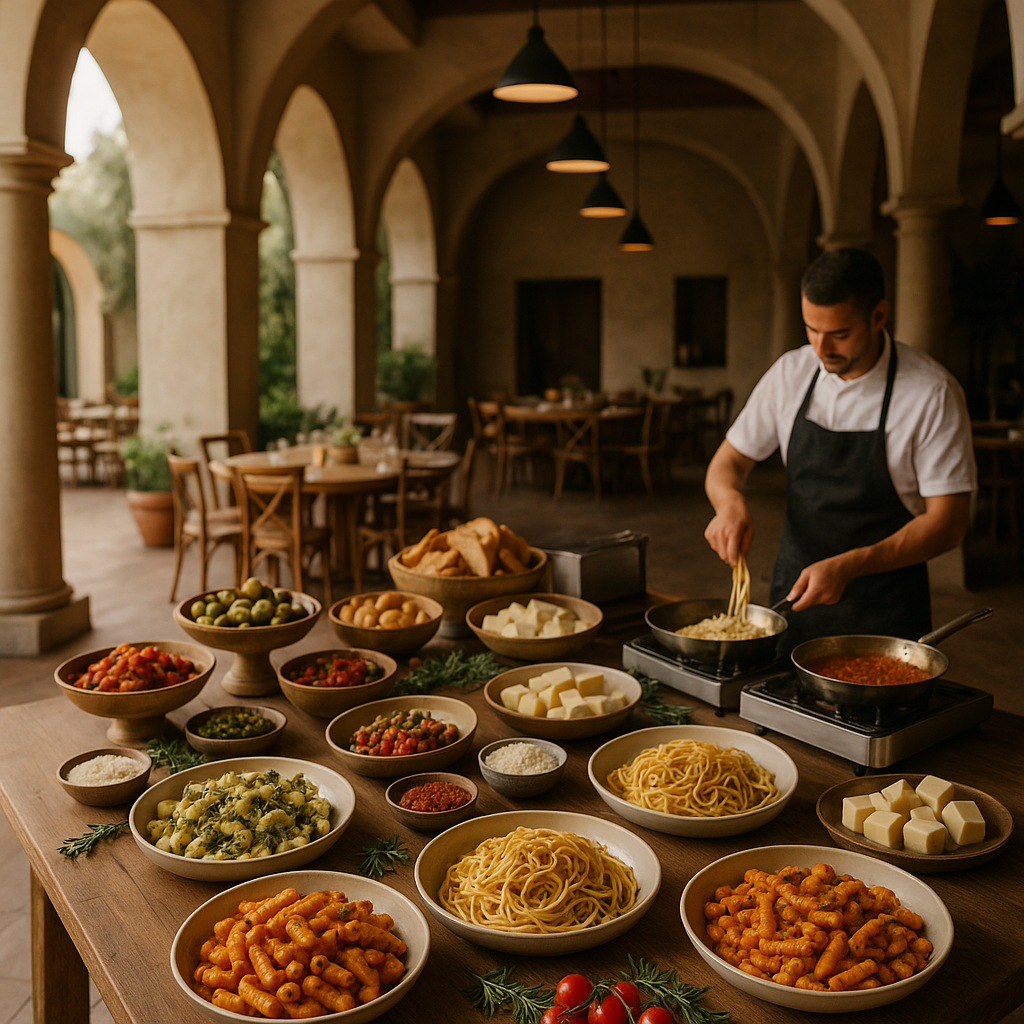
A few things that consistently help:
- Break large quantities into several smaller vessels. Three medium bowls of the same salad look better than one enormous one, and they let you refresh the table by swapping in a clean bowl instead of topping up a picked-over dish.
- Give each pasta dish its own serving utensil and enough clearance that guests are not reaching across other food.
- Separate the anchor dishes. Place the two or three heaviest items apart from each other so the crowd distributes instead of bunching at one end.
- Put plates at both ends if the table is long and the room allows approach from either side.
- Use greenery and whole ingredients as filler, such as bunches of herbs, whole lemons or heads of garlic, to close gaps without adding food that will not be eaten.
Label every dish. Small cards with the dish name and its main allergens are far more useful than decorative labels with only a name on them.
Allergens and Dietary Needs
Pasta touches several of the most common allergen categories, so this deserves a deliberate pass rather than an afterthought. Standard dried semolina pasta contains wheat. Fresh pasta typically contains egg as well. Pesto commonly contains pine nuts or other tree nuts and grated cheese. Anchovy appears in some Mediterranean dressings and puttanesca-style sauces, which surprises guests who assume a vegetable dish is vegetarian.
If you are accommodating a gluten-free guest, remember that a shared serving spoon or a neighboring dish that has been stirred with the same utensil undoes the effort. Give gluten-free dishes their own utensils and, where possible, their own section of the table with some physical separation. For guests with severe allergies, the safest approach is to be able to tell them exactly what is in a dish rather than to rely on labels alone.
Making the spread vegetarian is usually straightforward: build on vegetable and legume sauces, check for anchovy and for animal rennet in hard cheeses, and use egg-free dried pasta. A vegan version works too, replacing cheese with toasted nuts, breadcrumbs or a well-seasoned tomato and herb base for richness.
Timing, Temperature and Food Safety
Grazing tables sit out for a long time by design, which makes temperature the single most important operational detail. General guidance in the U.S. FDA Food Code is to keep cold foods at or below 41°F (5°C) and hot foods at or above 135°F (57°C), and to limit the time perishable food spends between those temperatures. The commonly cited consumer rule of thumb is a two-hour limit at room temperature, reduced to one hour when the ambient temperature is above 90°F (32°C).
Food safety requirements vary by state, county and venue, and permitted events are often subject to specific rules on holding, transport, handwashing and temperature logging. Treat the numbers above as a conservative starting point and confirm current requirements with your local health department or your caterer before the event.
Practical measures that make the table easier to keep safe:
- Plan for replenishment, not endurance. Hold backup batches at proper refrigeration and swap dishes out on a schedule instead of leaving one platter out for the full reception.
- Use chilled bases under cold dishes. Ice beds or chilled platters beneath serving vessels help, though they are not a substitute for refrigeration.
- Note the clock. Track when each dish went out so you are not guessing later.
- Discard rather than re-chill anything that has been sitting on the table past your time limit. Food that has been open to a room of guests should not go back into service.
Outdoor service adds heat, sun and wind. Set the table in shade, keep it away from direct sun for the entire service window rather than just the setup time, shorten your holding times, and use covers or domes between service periods where insects are a concern. In hot or humid conditions, oil-based dressings and vegetable-forward dishes are more forgiving than anything containing dairy, egg or seafood.
How Much Pasta to Plan For
There is no universal number, because it depends on how many other dishes are on the table, the length of the event and whether the grazing table is the meal or a precursor to one. As a rough planning starting point, caterers often estimate somewhere around 2 to 4 ounces (roughly 60 to 115 grams) of dry pasta per guest when pasta is one component among many, and more when it is the primary substantial dish. Adjust upward for longer receptions and for events where the grazing table replaces a seated meal, and talk the numbers through with whoever is producing the event rather than scaling from a home recipe.
Also plan for what runs out first. Guests reach for the recognizable and the easy to serve, so the simplest pasta salad on the table will usually empty before the most interesting one. Make more of it than you think you need.
A Realistic Prep Timeline
Most of this can be done ahead, which is the other reason pasta belongs on a grazing table. Dressings and herb sauces can be made a day or two in advance and stored covered under refrigeration. Vegetables can be roasted the day before. Pasta can be cooked, cooled and lightly oiled ahead of time, then dressed closer to service, since fully dressed pasta continues absorbing liquid and will need a refresh of oil and acid before it goes out.
Leave the final layer for the last moment: fresh herbs, soft cheese, anything crunchy, and a finishing drizzle of olive oil. That short list is what separates a table that looks freshly assembled from one that looks like it was built two hours earlier.
FAQ
What is a Mediterranean grazing table?
It is a self-serve spread arranged as a single continuous display, built around Mediterranean staples such as olive oil, fresh vegetables, herbs, legumes, briny cheeses, olives and bread. Most of it is served at room temperature, and guests graze over an extended window rather than being served a plated course.
Can pasta be prepared ahead of time?
Yes, and it usually should be. Cook and cool the pasta in advance, keep it refrigerated, and dress it closer to service. Room-temperature pasta salads with oil and acid dressings hold up well; cream and cheese sauces do not, and are better served hot to order.
Should pasta on a grazing table be hot or cold?
Room temperature or cold is the practical choice for anything sitting on the table. If you want hot pasta at the event, serve it from a station where it is cooked or finished to order, so it never sits in the temperature range you are trying to avoid.
How do I keep pasta from clumping?
Use short shapes, cook slightly past al dente for cold service, rinse and cool quickly, and toss with olive oil right after draining. Dress fully closer to service and add a little more oil and acid just before the dish goes out.
How long can a grazing table stay out?
Less time than most people assume. Follow conservative holding guidance, typically no more than about two hours at room temperature and less in hot conditions, and plan on swapping in fresh dishes rather than extending the life of one platter. Confirm the specific requirements that apply to your venue and event with your local health authority.
Putting It Together
The version of this table that works is narrower than the version most people imagine. Short textured shapes, oil and acid dressings, roasted rather than boiled vegetables, firm cheeses, generous seasoning, clear labels and a real plan for temperature. Get those right and pasta stops being the dish that looks tired by the second hour and becomes the one guests keep returning to.
If you would rather hand the execution to someone else, take a look at what is on the weekly pasta lineup, browse the store, check our locations to see whether we serve your area, and book a pasta station when you are ready to talk through your event.