Gourmet Event Food Stations: Elevate Your Guest Experience
Discover how gourmet food stations, especially pasta stations, can enhance your South Florida event. Engage guests with customizable dishes for an unforgettable experience.
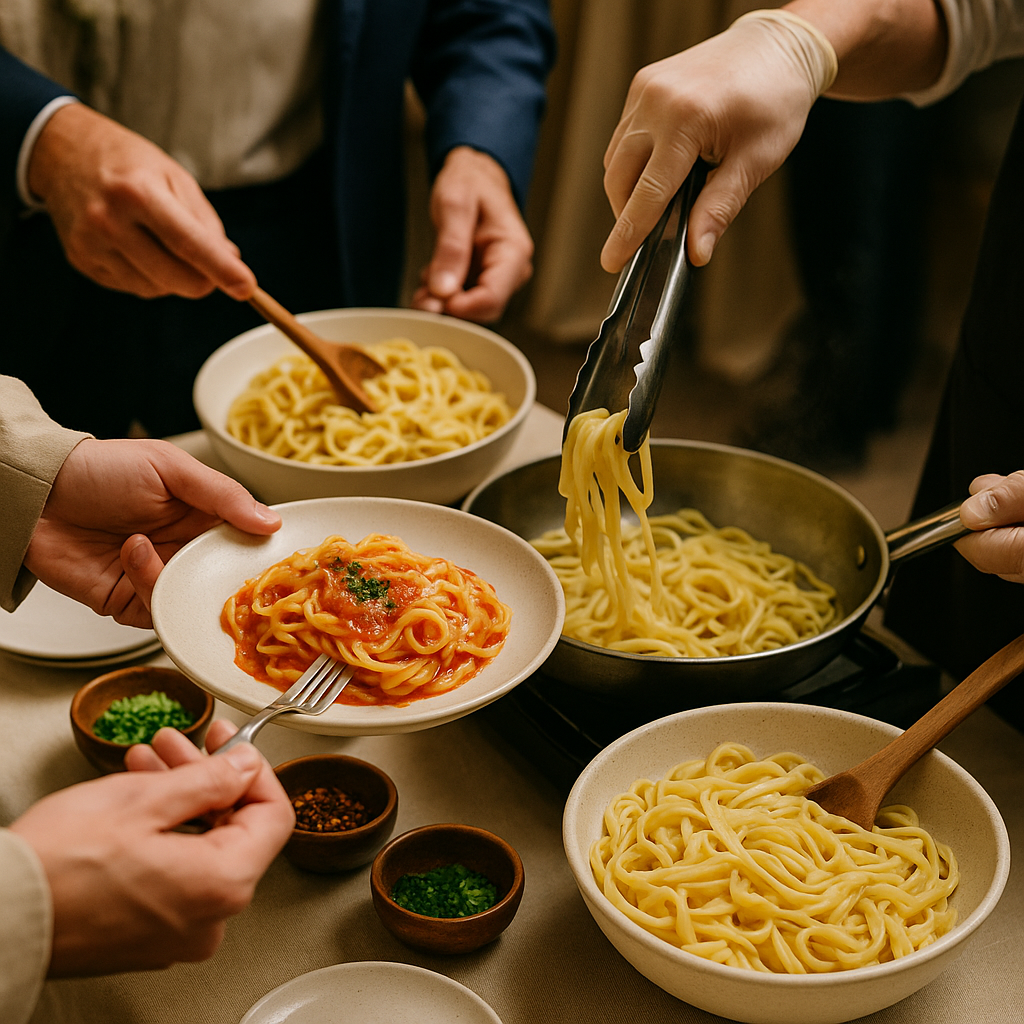
Most catering decisions are invisible to guests. Food stations are the exception. A station puts cooking in the middle of the room, and people notice. That visibility is the upside and the risk: done well, it becomes the part of the night people talk about. Done without planning, it turns into a long line between the bar and the dance floor.
Here is what actually matters when you add a pasta station to an event in South Florida, from layout and menu to heat, humidity and food safety.
What a Station Changes About Your Event
Plated dinners lock guests into their seats and lock you into a headcount weeks in advance. Buffets solve the choice problem but tend to move people through in silence. A station sits between the two. Guests walk up, pick what they want, watch it finish in the pan, and talk to whoever is next to them while they wait.
That last part is the real difference. A short, pleasant wait creates conversation. A long one creates complaints. Everything below is about keeping the wait on the right side of that line.
Why Pasta Works Well in This Format
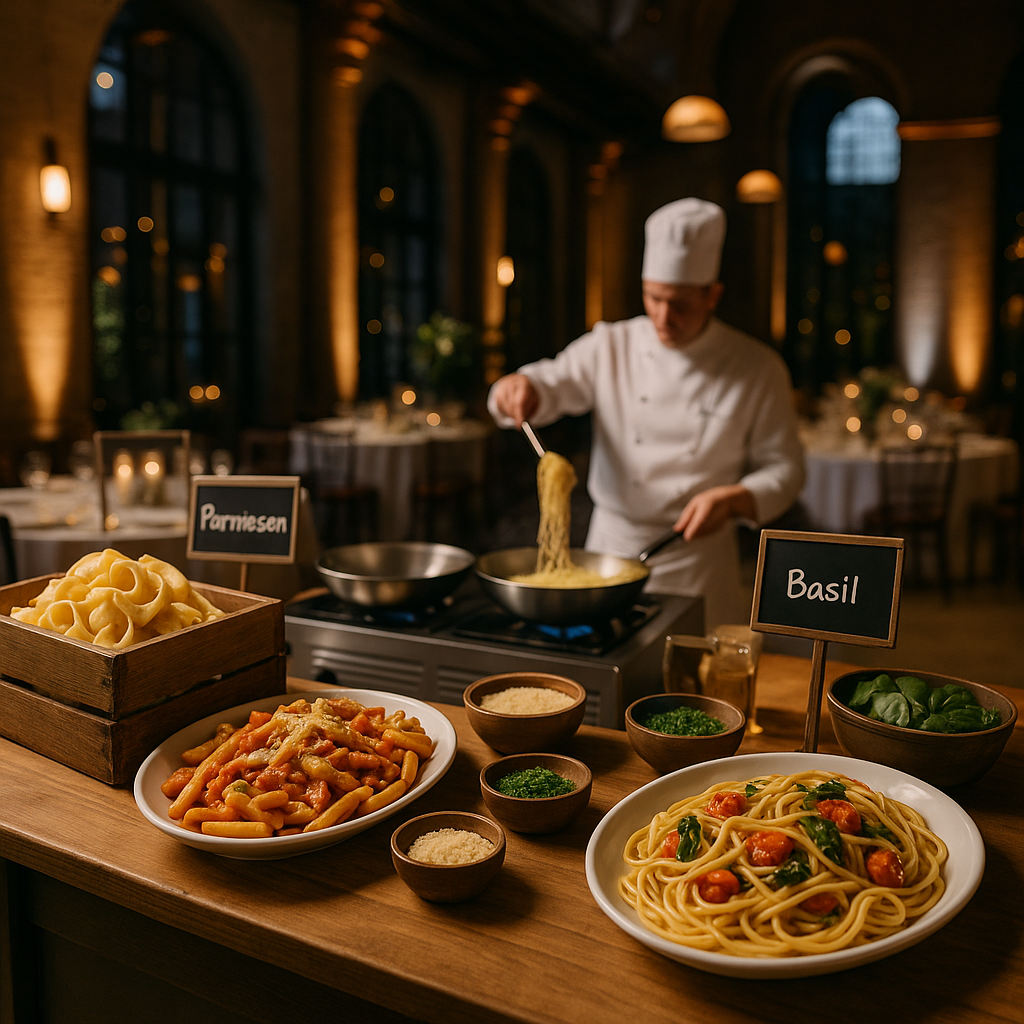
Pasta suits live service for practical reasons. Portions finish in a pan in a couple of minutes, so guests see the food come together instead of watching it sit under a lamp. The base ingredients are inexpensive relative to proteins, which leaves room in the budget for better sauces, cheese and garnishes. And nearly everyone eats it, which matters more at a 150-person wedding than at a 12-person dinner.
It also scales down cleanly. The same format works for a corporate lunch, a birthday at home, or a late-night second service after dancing starts.
Plan the Space Before the Menu
Station placement drives everything. A few things to work out with your venue and caterer early:
- Access from two sides. Guests approach from one side, staff work and restock from the other. Backing a station against a wall forces staff to cut through the guest line all night.
- Distance from the bar. Keep enough space that the two lines do not merge, but close enough that guests can hold a drink while they wait.
- Power and surface. Live cooking needs a stable table, adequate clearance, and a power or fuel source the venue actually permits. Ask the venue what it allows before you finalize anything, since rules on open flame vary widely by property.
- Line length. Splitting one long station into two shorter service points cuts wait times more effectively than adding menu options.
For headcount planning, a common starting point is one service point per 75 to 100 guests, adjusted for how long you want service to run and whether the station is the main meal or a supplement. Treat that as a conversation starter with your caterer, not a fixed rule. Their answer depends on their equipment and staffing.
Build a Menu That Covers Most Guests
Resist the urge to offer everything. Three or four well-chosen pasta shapes and two or three sauces will serve a crowd better than a dozen options that slow the line and complicate prep. Depth beats breadth here.
Do plan deliberately for dietary needs rather than improvising on the day:
- Gluten-free: Ask how it will be handled. Cooking gluten-free pasta in shared water or finishing it in a shared pan reintroduces gluten. If any guest has celiac disease, that distinction is medical, not preference.
- Vegetarian and vegan: A tomato-based sauce is usually the easy win, but confirm whether stocks, cheeses or finishing butter are involved.
- Common allergens: Dairy, wheat, eggs, tree nuts and shellfish all show up in pasta service. Ask for ingredient information in advance and make it available to guests.
- Labeling: Clear signs at the station let guests decide for themselves instead of interrogating a chef mid-service.
If you want a sense of the style of cooking before you commit, the weekly pasta menu is a reasonable place to start.
Heat, Humidity and Outdoor Service
South Florida adds a layer most planning guides skip. Outdoor events here contend with heat, humidity, sun, wind and afternoon rain, sometimes in the same three hours.
Some conservative general guidance:
- Hot foods are commonly held at 135°F or above and cold foods at 41°F or below. Ask your caterer how they monitor and document temperatures.
- Perishable food left in the temperature danger zone is generally discarded after limited time, and that window shortens considerably in hot outdoor conditions. Plan smaller, more frequent batches instead of holding large volumes.
- Shade the station. Direct sun on ingredients and equipment makes temperature control harder and makes the cook's job miserable.
- Plan for wind and rain. Tents, weighted linens and covered ingredient wells are basic, and a rain plan should exist before the week of the event.
- Handwashing and sanitation setups are typically required for outdoor food service.
These are general starting points, not a compliance checklist. Requirements for temporary and outdoor food service vary by jurisdiction and change over time. Confirm current rules with your local county health department or the applicable Florida state agency, and ask your caterer to confirm their licensing, insurance and permits for your specific venue. Check the service areas to see whether your venue falls inside the current coverage area.
Questions Worth Asking Before You Book
Cost depends on guest count, menu, staffing, service duration, travel and venue requirements, so a single price range would not tell you much. What helps is knowing which questions produce a comparable quote:
- What is included in the quoted price, and what is billed separately? Staffing, rentals, travel, setup and breakdown time are common line items.
- How many staff will be on site, and for how long?
- What equipment do you bring, and what does the venue need to provide?
- How are dietary needs and allergen questions handled during service?
- What is the deadline for final headcount, and what is the cancellation or weather policy?
Ask the same set of questions to every caterer you are considering. The differences in their answers will tell you more than the totals will.
Start the Conversation
If you are weighing a pasta station for an upcoming event, the fastest path is a real conversation about your venue, guest count and timeline. You can book a pasta station or browse the store for smaller-scale options.