How Much Lasagna Do You Need for 8, 12 or 16 People?
Choose the right lasagna tray size for a family dinner, office meal or gathering.
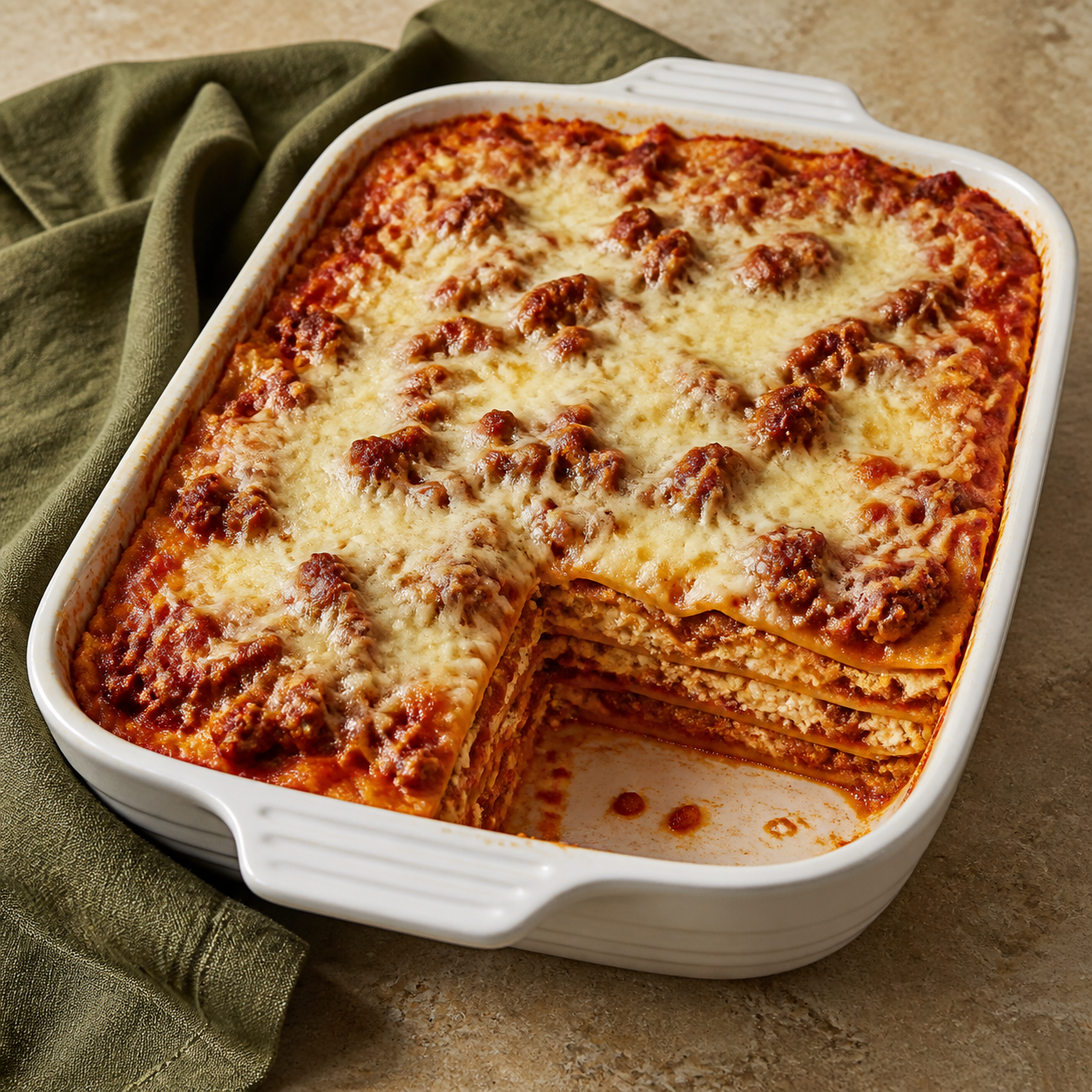
How Much Lasagna Do You Need for 8, 12 or 16 People?
Ordering lasagna for a group is really two questions in one: how many people are eating, and how hard is the lasagna working. A tray that feeds a crowd comfortably as part of a full spread can come up short when it is the only hot dish on the table. Get that distinction right and the rest of the math is simple.
This guide walks through how to pick between an 8, 12 or 16 serving tray from The Pasta Station, how to adjust for the guests you actually have, and how to avoid the two mistakes that cause most sizing regrets.
Start with the role lasagna will play
The right tray starts with the role lasagna will play at the table. If it is the main course, use the stated serving size as your planning baseline and do not discount it. Everyone at that table is filling their plate with the same dish, and appetites vary more than most hosts expect.
If several substantial dishes share the table, portions may stretch further. A second hot entree, a hearty pasta salad, or a protein platter all pull demand away from the lasagna. But that margin is thinner than it looks. Hungry teenagers, guests who skipped lunch before driving over, and second helpings quickly erase it. Treat a shared table as a small cushion, not a license to size down a full tray.
Match the tray to the table
The three sizes map cleanly onto three common situations.
8 servings
An 8-serving tray suits a family dinner or a small gathering. Think a weeknight meal that carries into lunch the next day, a quiet birthday dinner, or a get-together where the guest list is fixed and you know exactly who is coming. It is also the right size when lasagna is one of two mains and you want variety without excess.
12 servings
Twelve servings work well when a few guests may return for seconds. This is the practical choice for most casual hosting: a family gathering with a mix of ages, a team lunch, a holiday table where people graze. If you are torn between 8 and 12 and the headcount is uncertain, 12 is usually the more comfortable landing spot.
16 servings
Sixteen servings give a larger group more breathing room. Use it for a party, a potluck where you are covering the main, a milestone celebration, or any event where late arrivals are likely. It is also the sensible pick when you want a genuine buffet feel, where the tray never looks picked over halfway through the evening.
One note that applies to all three: add salad, bread or vegetables separately rather than assuming a tray includes them. Plan those alongside your order, not instead of it.
Order for the real guest list
The invite list and the eating list are rarely identical. Before you choose a size, run through four quick questions.
Who is actually eating? Count adults and children separately. Small children rarely finish an adult portion, and a table with several young kids stretches a tray further than the raw headcount suggests. Teenagers do the opposite.
What are the dietary needs? Consider dietary needs before you order, not after. If part of your group will not be eating the lasagna, that changes both the size you need and what else has to be on the table. It is easier to plan around this at the ordering stage than to improvise on the day.
How long is the event? A two hour dinner with a set start time behaves very differently from an open house where people drift in over an afternoon. Longer events mean more grazing and more return trips to the tray.
Are leftovers welcome? This is the question hosts skip most often, and it is the one that settles close calls. If leftovers are a bonus, size up without hesitation. If you have no room in the fridge and no interest in eating the same dish twice, size to the headcount and add sides instead.
When to size up
A few situations reliably justify the larger tray:
- The guest count is a range rather than a number.
- Lasagna is the only hot main on the table.
- Your group skews toward big eaters, or includes teenagers.
- The event runs long, or people will arrive at staggered times.
- You would happily eat the leftovers.
And a few where holding steady makes more sense:
- You have a confirmed, final headcount.
- There is a second substantial main dish.
- Several guests are eating something else entirely.
- Refrigerator space is genuinely tight.
Build the rest of the table around the tray
Once the size is settled, the sides do the fine tuning. A generous salad and bread absorb a surprising amount of demand and make a 12-serving tray behave more like a larger one. Vegetables give guests a reason to build a fuller plate without going back for a third helping of pasta. If you are between sizes and leaning smaller, adding one more substantial side is often the better fix than jumping up a tray.
Plan those items as separate line items in your head. The tray is the anchor; everything else is the adjustment dial.
Common sizing mistakes
Counting invitations instead of appetites. Twelve guests is not the same as twelve equal portions. Mixed groups need a mental adjustment in both directions.
Assuming sides are included. Order salad, bread or vegetables as their own decision.
Sizing down because there is a second dish. A shared table helps, but not as much as most hosts assume, especially if the other dish is light.
Forgetting the second helping. If the food is the centerpiece of the evening, people will go back. Build that in from the start.
Frequently asked questions
How do I choose between 8 and 12 servings?
If your headcount is confirmed and there are other substantial dishes, 8 is enough. If the number could move, or lasagna is carrying the meal, choose 12.
How do I choose between 12 and 16 servings?
Ask whether anyone is likely to come back for seconds and whether leftovers are welcome. If the answer to either is yes, 16 gives you room. If your list is fixed and the table is crowded with other food, 12 will hold.
How should I count children?
Count them, but count them lightly. A table with several young children usually needs less than the raw headcount suggests. A table with teenagers usually needs more.
Do I need to work out pan dimensions?
No. The Pasta Station offers clearly labeled sizes so you can choose without converting pan dimensions in your head. Pick the serving count that matches your table.
What if I am hosting an open house?
Staggered arrivals extend the eating window, which usually means sizing up. A larger tray also keeps the spread looking full for guests who arrive late.
The short version
Decide whether lasagna is the star or a supporting dish. Count the people who will actually eat it, adjusting for children and big eaters. Decide whether leftovers are a bonus or a burden. Then pick the labeled size that matches, and plan salad, bread or vegetables as a separate step.
Do that, and you will spend the evening hosting instead of rationing.